
We've Already Been Dopamine Grieving. I Just Gave It a Name.
The Concept I Coined That Changed How I Experience Loss
By: Get Griefy Founder and Editor-in-Chief Kera Sanchez
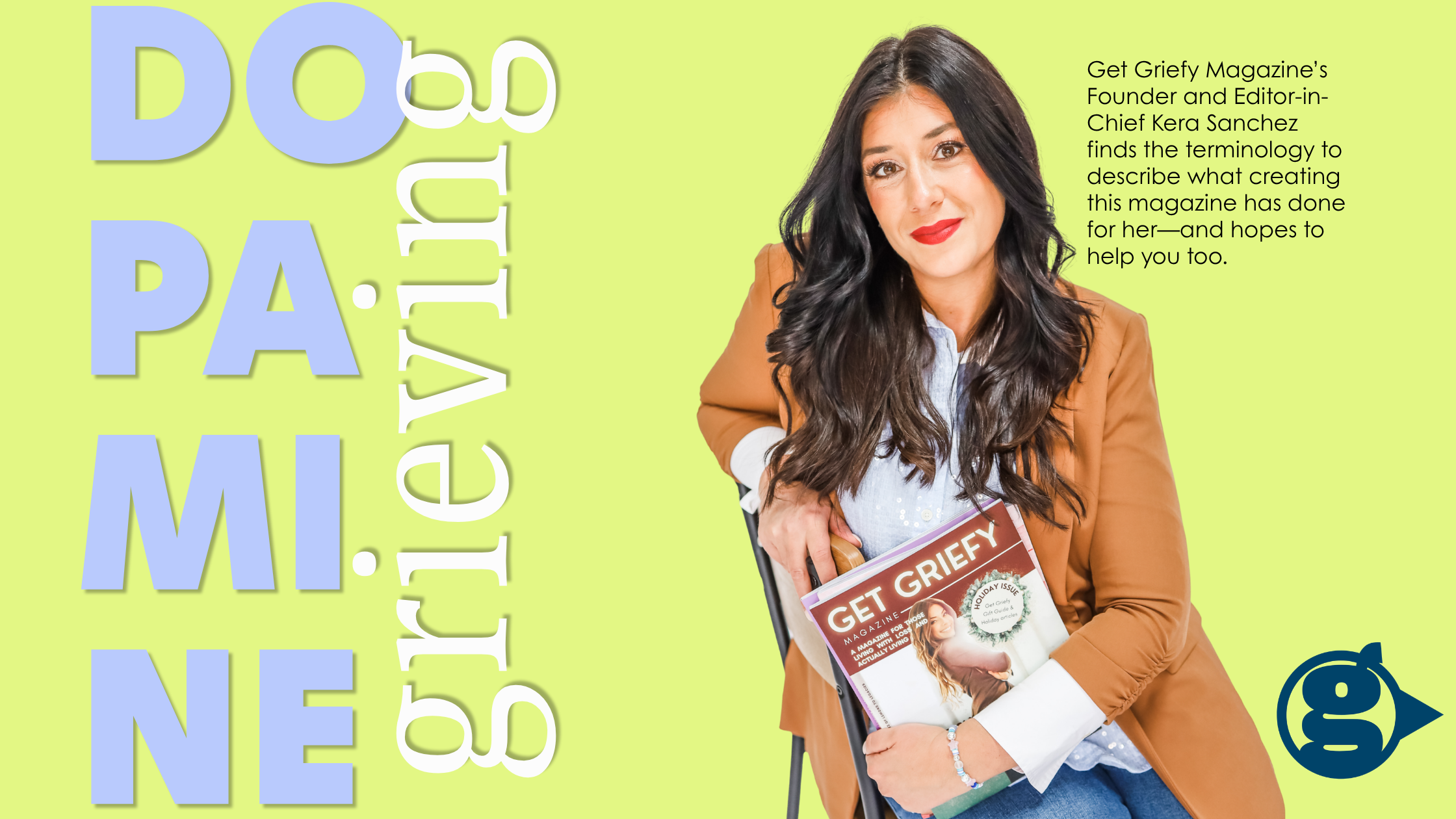
Let me introduce you to a term I’ve been sitting with, living out loud, and quietly building for the past two years — and I think it’s time I put a name to it officially.
Dopamine grieving.
I’ve been living it intuitively for years, and now I’m fully owning it. I’m shouting it from the rooftops in the hope that it might help others do the same.
You’ve probably heard of dopamine dressing — the idea that you intentionally curate outfits and accessories that brighten your mood. You don’t wait for a special occasion to wear the necklace. You don’t save the fancy shoes. You put on what makes you feel good, and you wear it with intention.
Dopamine grieving is that same philosophy applied to how you move through loss.
It’s the intentional curation of people, resources, relationships, experiences, and community that allows your grief to feel lighter, brighter, and more alive — without dismissing the weight of what you’ve been through.
It doesn’t mean pretending grief isn’t hard. It doesn’t mean skipping the dark parts or rushing your timeline. It means making active, deliberate choices about what you’re feeding yourself in this season.
Why I Needed This Concept
When I started Get Griefy Magazine, I noticed something. So many of the most authentic conversations about grief — the real ones, the raw ones — still carried this heaviness. A lack of color. A kind of resignation.
And while I absolutely believe there’s space for that (grief is grief, and it asks for what it asks for), I also knew there was something else available. A space for grief conversations that are bold. Empowering. Inspiring. Full of color and humor and possibility.
I didn’t want people to give up on their futures because of a loss. Because I know firsthand what that mental space feels like — where you just want to be where your person is. Where you can’t see a reason to be present in a life that feels gutted.
When my mom died, I felt ready to throw in the cards, despite having an incredible husband. Two beautiful daughters. A living parent and sibling. So much still to live for. And I almost let grief convince me otherwise.
Dopamine grieving is how I didn’t.
What Dopamine Grieving Actually Looks Like
Here’s the thing: this isn’t a one-size-fits-all prescription, nor is it a grief “cure”. But here are some of the ways I’ve lived it — and the ways I invite you to try.
Seek out people doing inspiring things with their grief. I want to be clear — this doesn’t mean every person in your life needs to be a thought leader or a public figure. What it means is surrounding yourself with people who haven’t given up. People who are a few steps ahead of you on the path. Because grief has a ripple effect, and community built around camaraderie is one of the most powerful forms of dopamine grieving there is.
Choose your resources intentionally. The podcasts you listen to, the accounts you follow, the books on your nightstand — these are choices. Seek out grief content that is supportive and inspiring. Here at Get Griefy, we believe that grief can be one of the most unexpected places to find new purpose, new joy, new passion. Talking about that more openly removes the guilt around it.
Focus on what can be, not just what was. This is one of the hardest shifts. But it’s also one of the most transformative. Grief doesn’t erase your future. Sometimes it actually clarifies it.
Put yourself in situations that make you feel alive. Try the new restaurant. Take the risk. Laugh loudly with a friend. Work out. Find the new hobby. I know that in the early, tender phases of grief, this isn’t always accessible. But I challenge you to find one burst of dopamine every day. Even a small one.
Infuse color and humor into your grief. When grief feels less monolithic and one-faceted, it becomes less suffocating. Bright colors, a sense of lightness, conversations that make you laugh even when you’re sad — these aren’t a betrayal of your loss. They’re a tribute to your survival.
Where I Am Now
I’m just shy of four years out from losing my mom. She was 57. Bold, vivacious, spunky — a woman who lived many lifetimes in far too few years.
When she died, I became a mom trying to navigate grief and motherhood and careers and all of the things — without the parent I most wanted to call.
I’ve been feeling lighter for over a year and a half now. And as long as Get Griefy has existed, it has exponentially helped me get here.
That’s not a coincidence. That’s dopamine grieving in action.
The Mission Behind the Term
My mom lost her dad right when I was born. She learned how to become a mother without the parent she loved most. I wish we’d talked about that more openly. I wish I had her advice in my pocket right now.
That’s exactly why this space exists. We have to de-stigmatize these conversations. Talking about grief doesn’t make life feel less livable — it makes it feel more emboldened. More real. More full.
Grief sucks. But life doesn’t have to.
That’s been the value system behind Get Griefy from day one. And dopamine grieving is the practice that holds it all together.
I hope it finds you wherever you are in your journey.
Kera Sanchez is the founder of Get Griefy Magazine, a space dedicated to bold, empowering, and honest conversations about grief and loss. She is an award-winning grief educator, certified grief and resilience expert, and passionate advocate for grief literacy. Through her work, Kera helps individuals and communities navigate loss with greater understanding, compassion, and support.
Learn more and explore resources at GetGriefy.com
