
A Military Acronym We All Carry
Inside TAPS' 32nd Annual National Military Survivor Seminar & Good Grief Camp— a Memorial day weekend tradition where remembrance, resilience, and room for joy all share a table.
By Get Griefy Editor-in-Chief, Kera Sanchez
Memorial Day weekend carries a particular weight for those who know what it actually costs. For most Americans, it arrives as a long weekend. The first real exhale of summer, marked by backyard grills, parade routes, and a Monday alarm that mercifully stays off. But beneath the char lines on the burgers and the brass of the marching bands is a grief that doesn't take the weekend off. For the families of the fallen, there is no three-day reprieve from the absence at the table.
As a military spouse, a grief advocate, and Editor-in-Chief of two publications that support both communities, I often carry those two identities in opposite hands, rarely juggling them, more often setting one down to tend to the other. But this Memorial Day weekend, I found myself sitting squarely at their intersection, inside a ballroom filled with hundreds of people who needed no explanation for why both belong in the same room. And for once, I wasn't choosing which hat to wear. I was wearing both, and so was everyone around me.
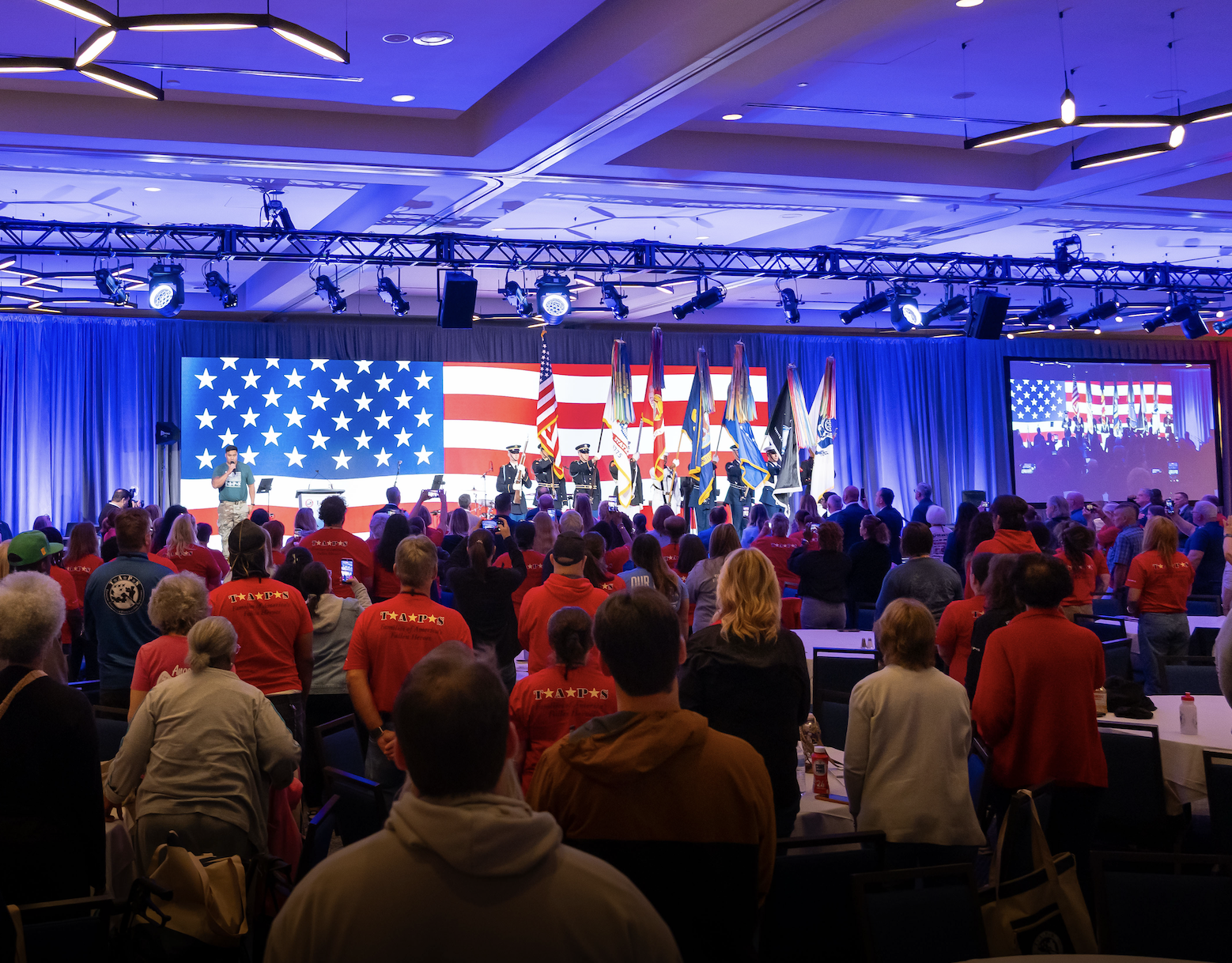
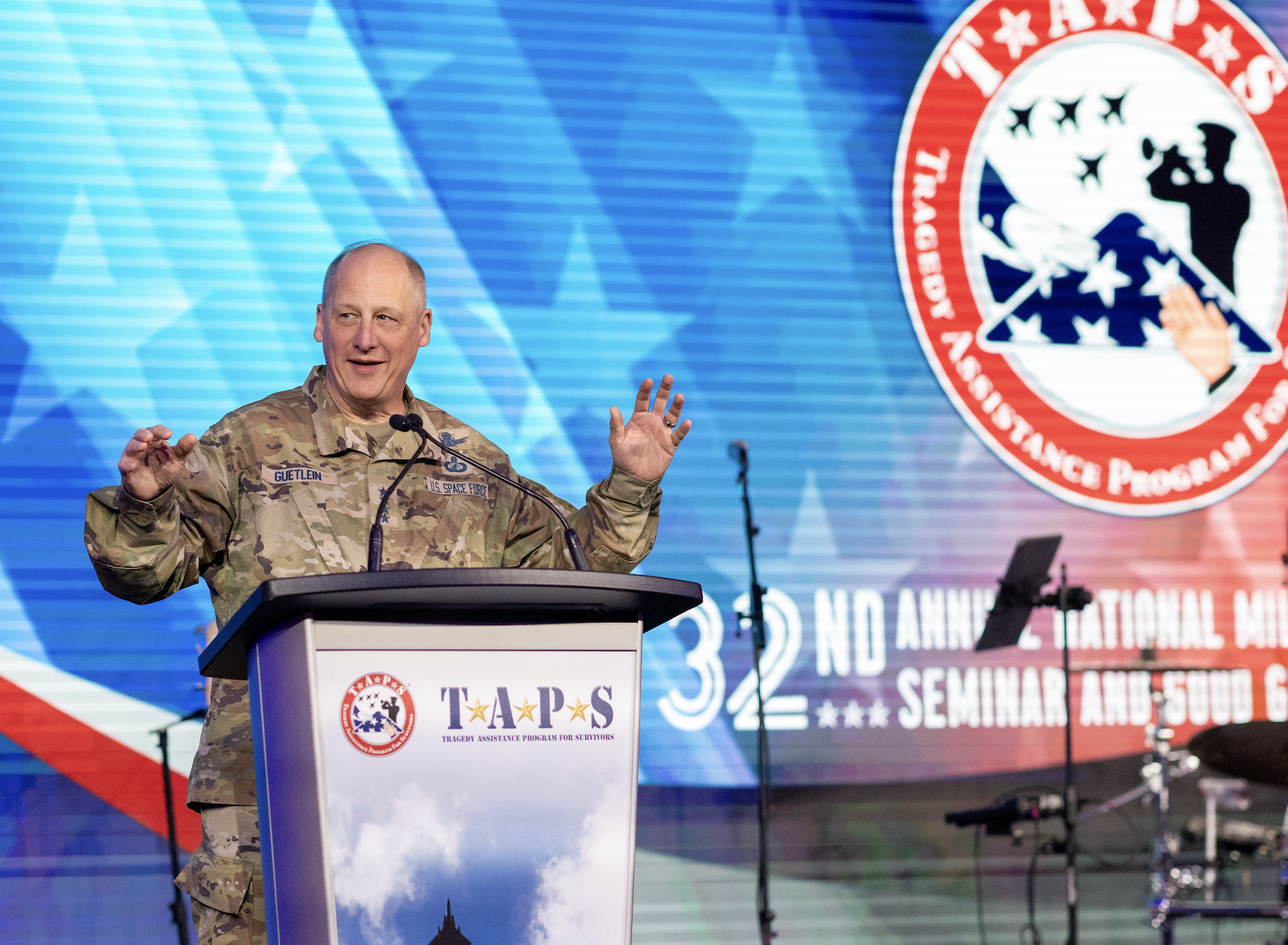
The 32nd Annual National Military Survivor Seminar and Good Grief Camp, hosted by TAPS — Tragedy Assistance Program for Survivors — is exactly the kind of gathering that stops you mid-step. As I entered, the Army Band Downrange was playing "You're Welcome" from Moana, and children were zooming between banquet tables in their group themes draped with capes, silly hats, and filling the air with a particular kind of electricity that doesn't immediately read as grief— It was joy. Loud, unabashed, intentional joy. This I learned, was the whole point.
A Room Dressed in Purpose
It didn't take long to understand the language of the room.
The colored t-shirts worn by adults and kids weren't a coincidence, they were a map. Purple shirts belonged to Legacy Mentors: once-young campers who attended Good Grief Camp during their own seasons of loss, now returning to guide the next generation through theirs. Blue and White shirts marked active duty and veteran mentors and group leaders, volunteers who gave up their long weekend to remind military kids that they are, in every way, America's young people. Red shirts were for the survivors themselves — the living, breathing reason this weekend exists.
Together, these three groups form the architecture of the entire program: a peer mentorship model built on the radical premise that the best experts in grief are the people living it. Lisa Zucker, TAPS Senior Director for the Institute for Hope and Healing, articulated more about their philosophy clearly when we spoke. “Training and structure matter”, she said, “but from there, the most powerful experts are the grievers themselves.” The goal of the weekend isn't to pathologize grief. It's simply to make space for it, to let it exist without being rushed, fixed, or explained away. And the most important era of Grief? Making Meaning, and this weekend is oozing with purpose.
How a Table Became a Movement
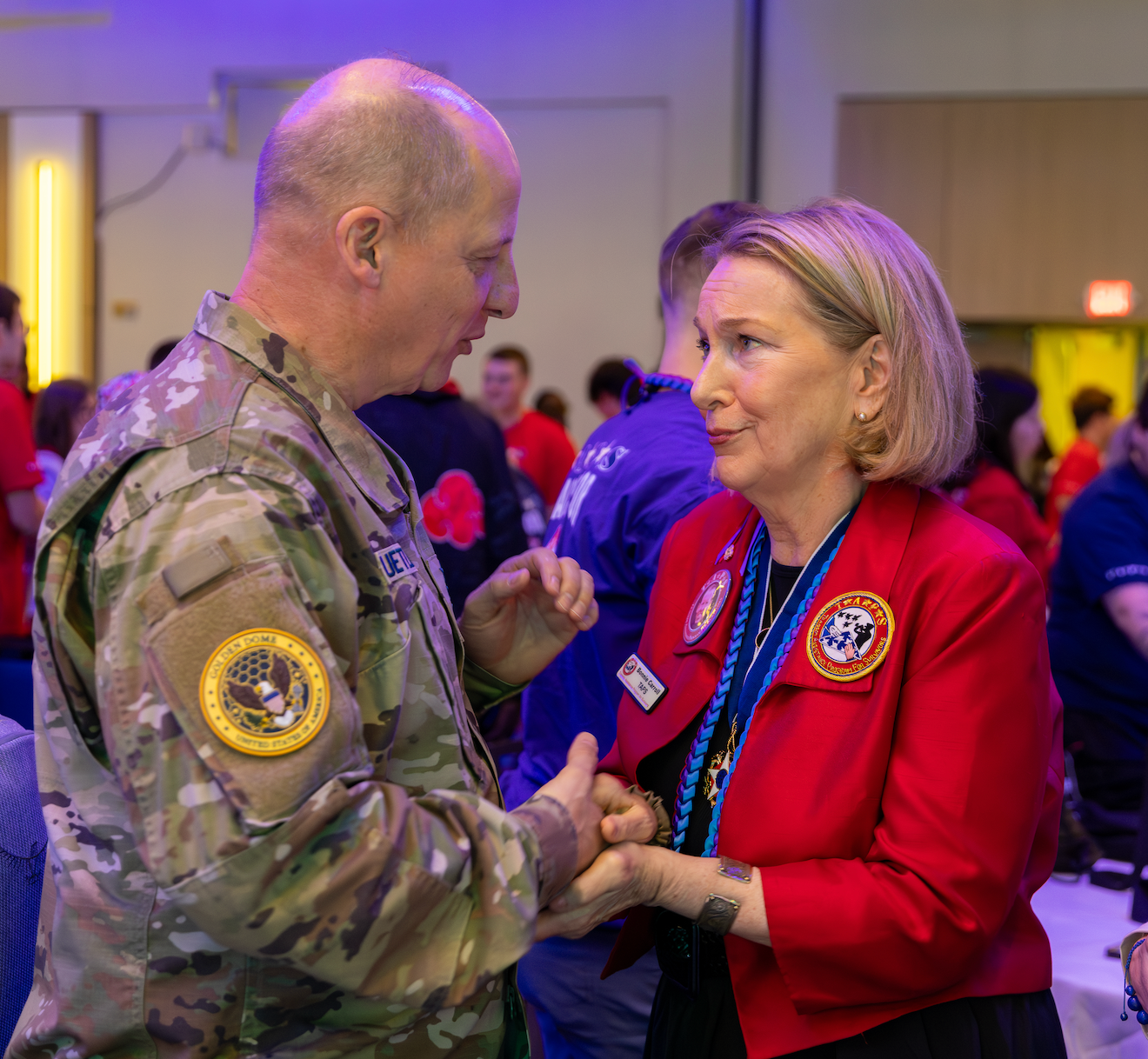
TAPS founder Bonnie Carroll traced it all back to something simple: a meal.
In 1992, an Army plane crash took the lives of eight soldiers. Carroll was among the surviving spouses left in the wake — along with seven other families — all of them quietly wondering, now what? People didn't know what to say. But they knew everyone had to eat. So they sat together, around a table, and shared both food and the particular ache of their new reality.
That table is now thousands of families wide.
Thirty-two years later, what began in commiseration has grown into an organization offering more than 1,300 events in 2025 alone. Standing before the ballroom, Carroll offered the words that seemed to hold the entire weekend together: "We are the living legacies." The deaths, she reminded everyone, may be what brought them all into the same room. But it is how they live together that keeps the relationships flourishing.
She also shared a touching story from the funeral procession of President John F. Kennedy, recalling how young Caroline Kennedy rolled down her window and reached out to a Secret Service agent, who held her hand for the entire procession. She reminded the audience that this is exactly what the Tragedy Assistance Program for Survivors (TAPS) does — you just have to begin by rolling down the window.
Two Girls, One Grief, Every Variation
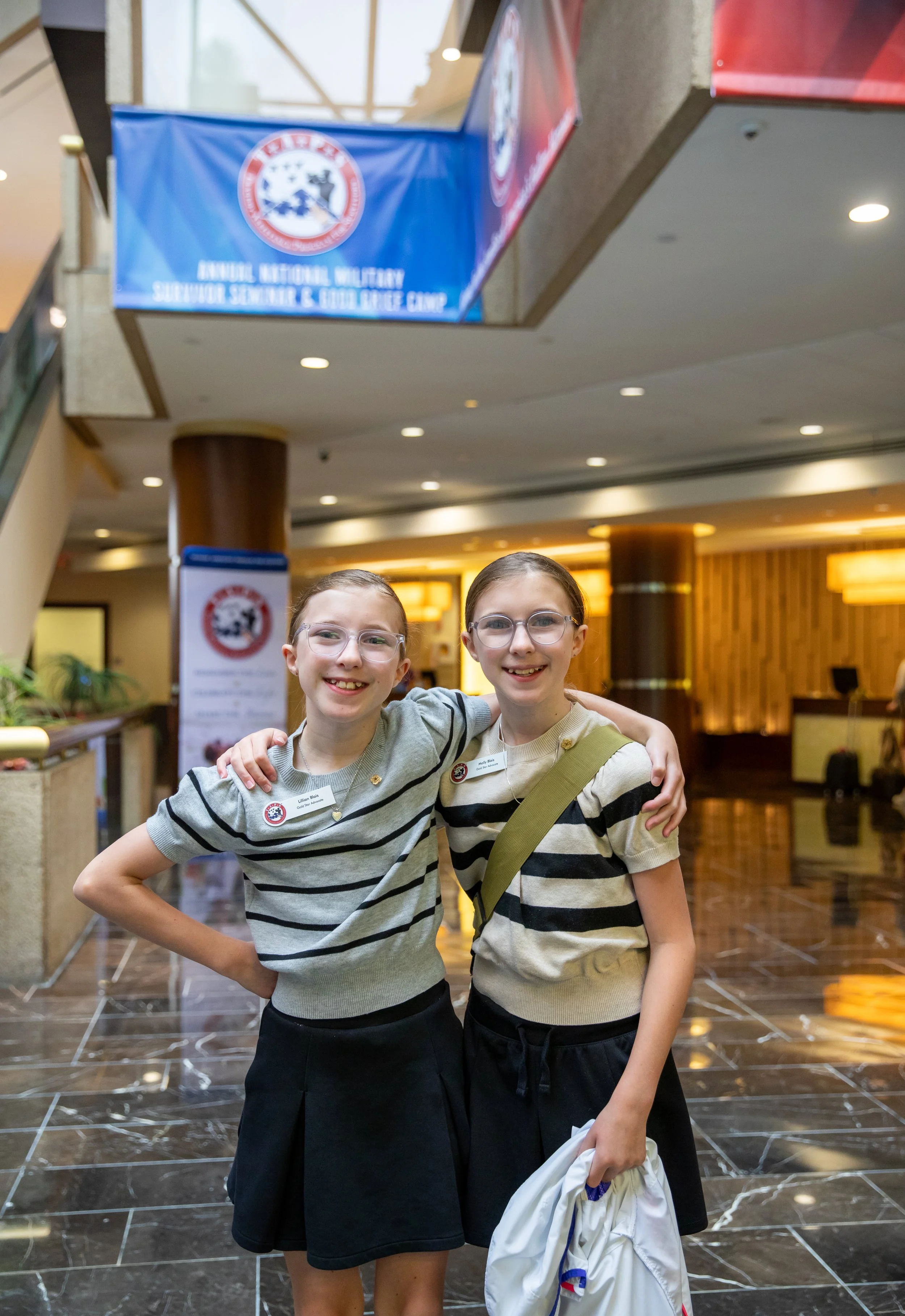
Grief, of course, is not monolithic. That truth showed up most clearly in a pair of twins.
Molly and Lilian Blais are attending Good Grief Camp for the fourth year, here to honor their father, Master Sergeant Scott Blais. Seated beside each other, they displayed in real-time that every grief journey is unique. Molly reserved, watchful, absorbing the room in her own deliberate way; Lilian open and effusive, already counting down to next year before this one has ended.
When I asked Lilian what she loved most about the weekend, she didn’t hesitate. It was being surrounded by kids who truly understood. “It feels like a moment when I actually have someone to talk to,” she shared.
What she expressed next was heartbreaking. At school and at home, she often feels like she doesn’t have anyone she can turn to who truly understands her loss. Yet even at such a young age, Lilian is already learning how to advocate for herself and others. Just days earlier, she had visited Capitol Hill on Thursday, and she lit up talking about the experience. “It was really cool,” she said with a smile.
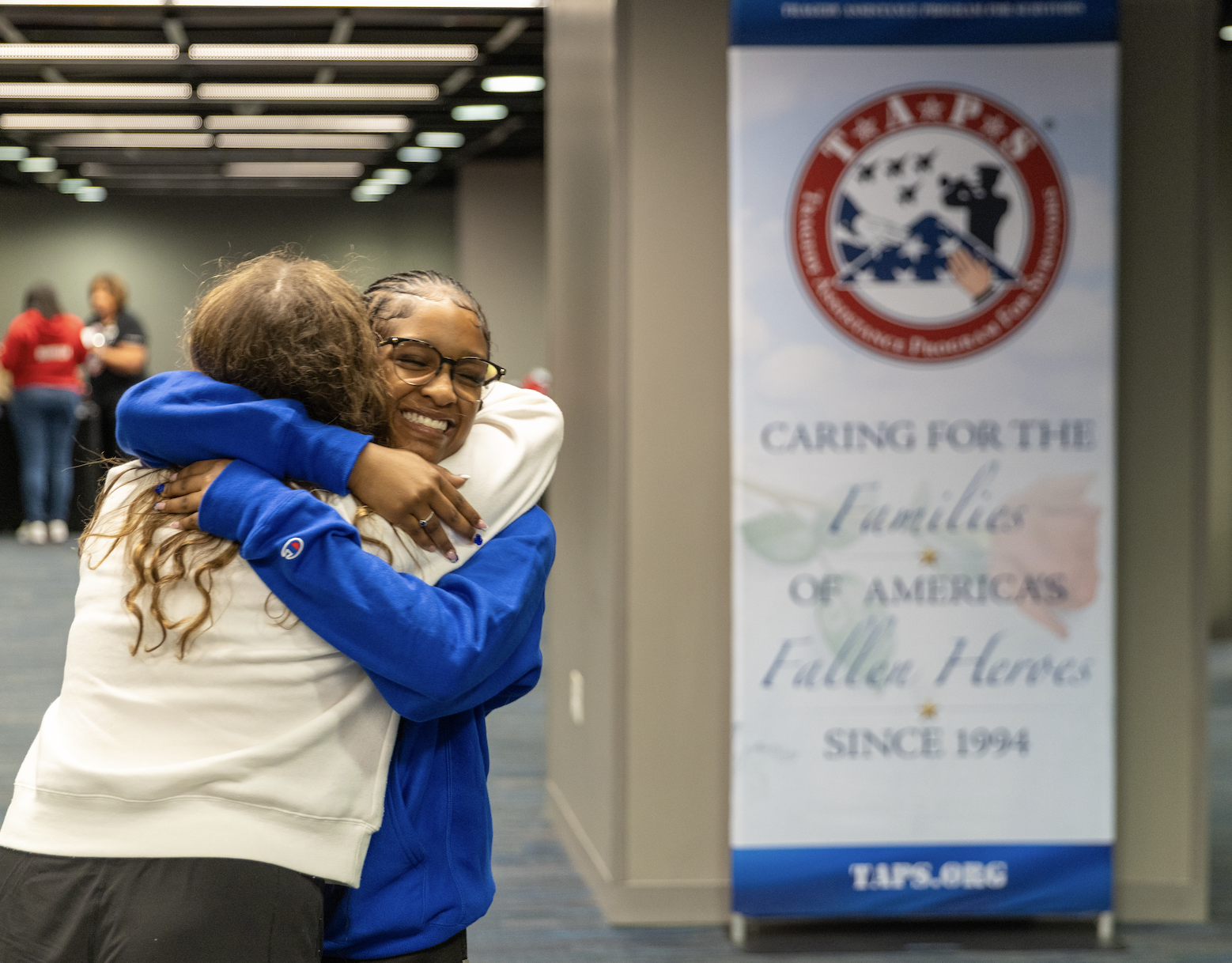
What makes this weekend so meaningful isn’t just the activities or events — it’s the connection. Not well-meaning teachers or peers who may not fully know how to hold the weight of what she’s been through, but children who carry the same specific shape of loss.
And the hardest part of the weekend? Saying goodbye.
When I asked about her dad, her face changed in that particular way that happens when love and grief arrive together. He was silly, she said. Always making jokes. “There was never a moment when I was sad around my dad.” And so she has found a way to honor him by leaning into laughter — to spend the weekend in the spirit of the man he was.
The Mentors Who Continue to Show up
Lilian and Molly's group mentor, Adison Horne, knows what it’s like to attend Good Grief as a kid.
Horne began attending Good Grief Camp in eighth grade, after losing his brother, Sergeant Trey Horne of the Army National Guard. He remembers the pull of DC, the relief of finally being around kids who understood, the bond with his favorite mentor, Thelonious, who met him in his love of comics and marvel superheroes. Now he continues to come back — not just as a mentor, but as a living proof of concept.
“I think I became a mentor for others before I officially became a mentor,” he told me. Returning each year feels like coming home to family, and he shared how disappointed he was to learn that one of the legacy mentors he grew up alongside wasn’t able to attend this year.
When asked what most people get wrong about grief, his answer landed without hesitation: "That it's something to be sorry about. I'd rather celebrate the life that was lived. The death was only .01% of their life. Let's talk about the way they lived."
Adison laughs when talking about Trey, who taught him to box. He Loved wrestling. Would absolutely walk up right now, Horne says with a grin, and give him a noogie — and tell his little brother he’s proud.
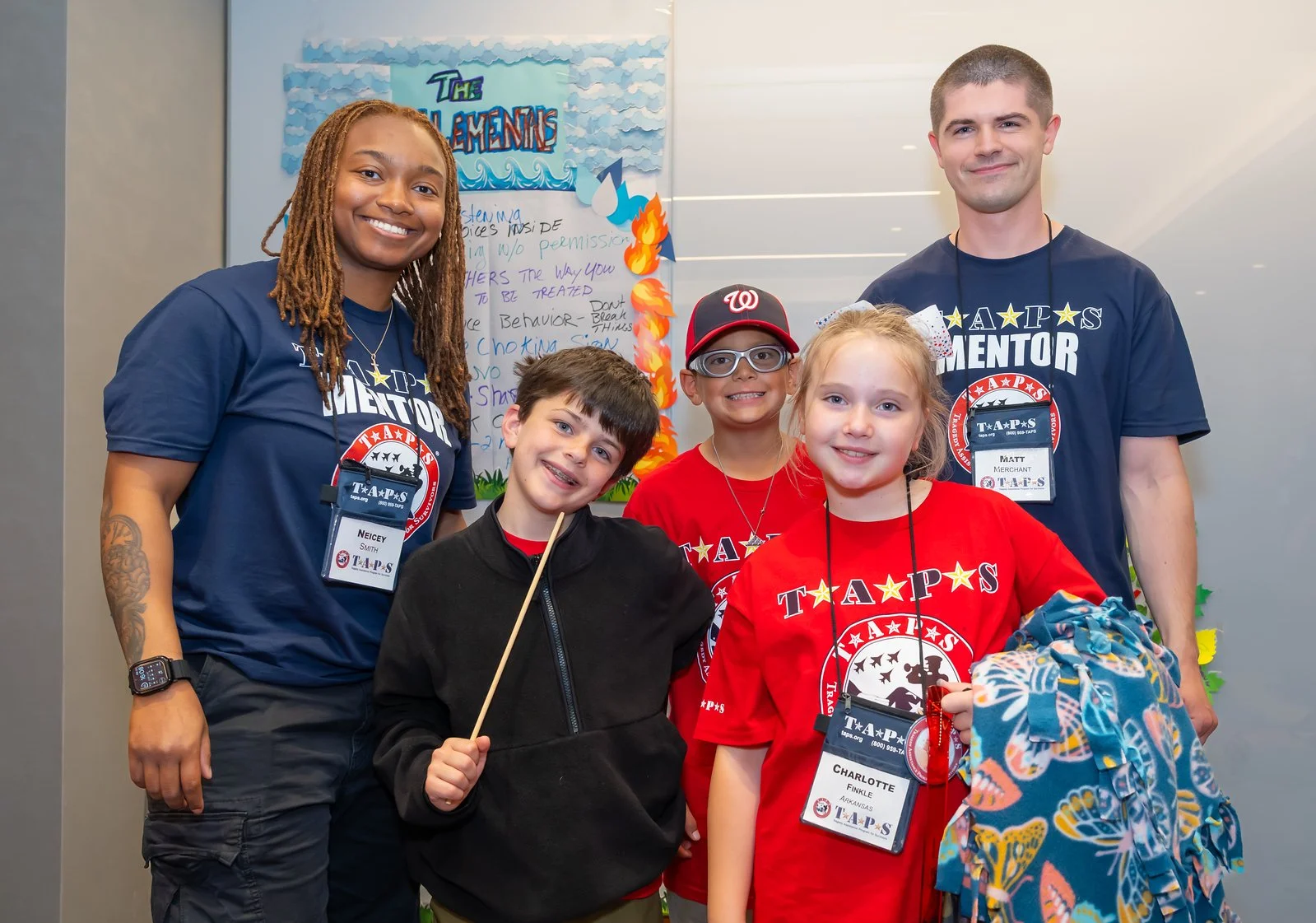
Tragedy Assistance Program for Survivors (TAPS), 32nd Annual TAPS National Military Survivor Seminar and Good Grief Camp. Photo Credit: David & Barb Hiltz
The Grief That Follows Service
Not every form of grief in that ballroom shared the same origin.
David Van Roeyen came to TAPS as a combat veteran navigating a different, often unacknowledged kind of loss: the grief that arrives when service ends, when identity and purpose seem to detach alongside the uniform. But layered within that transition was another kind of sorrow too, the grief of deployments marked by fallen peers, brothers and sisters in arms whose absences never fully leave you. The military teaches service members how to keep moving forward, even while carrying loss after loss, often without ever being given the space to process it.
He describes what we know as disenfranchised grief, mourning that is not always recognized because there is no single, easily identifiable loss to point to. Instead, it accumulates quietly over years: the end of a career, the loss of structure and belonging, the memories of those who never came home, and the invisible weight of surviving when others did not.
Years of mentoring at Good Grief Camp have given him language for what he has been carrying. Compounded grief, he now sees, has the capacity to become compounded growth, but only if you are willing to sit with it, face it, and let it teach you something.
At first, he questioned the very idea of Good Grief Camp. He reflects on his initial reaction to the concept, “What? How can grief be good?” he shares. But after years of volunteering, his perspective shifted. “Nothing anyone says is completely new,” he reflected, “but hearing it said in a new way, from a new perspective, can only equate to growth. Compounded grief will turn into compounded growth.”
His metaphor for grief is one I will carry with me: “grief”, he says, “is like gravity. You can jump, but you will always come back down. It is inevitable. It exists because we love. You cannot outrun it — only learn how to land.”
Filling the Gaps
Major Mandy Carnes, a Marine Reserve officer who has volunteered with TAPS since 2012, came to this work through a reckoning she didn't anticipate.
When a colleague died by suicide while she was at Officer Candidate School, she was confronted with something she'd never fully examined: how normal death can start to feel in the military, and how dangerous that normalization becomes when it hardens into isolation. "You don't realize how normal death gets," she said quietly. "And we can either isolate ourselves and have those dark thoughts, or we can cope together, in a positive way."
Her read on the landscape is measured and direct: the military does a meaningful job of honoring its fallen. TAPS fills the space that comes after. And she's clear that the mentors don't show up just to give— they receive just as much as the children they serve.
Showing Up
My time at TAPS concluded with Jessica Arendt, a surviving spouse who lost her husband in 2019.
For a while, COVID was, as she put it, "a convenient excuse" to avoid engaging with her grief in the community. It wasn't until some gentle encouragement from the TAPS helpline nudged her toward attending events that things began to shift. Now, she can't imagine missing the in person events. Her children already talk about becoming Legacy Mentors someday.
As we spoke, her eyes filled— and mine did too. We laughed about it, the way you do when you're in a room where that kind of thing is entirely expected and entirely fine. She told me what doesn't hurt about this weekend: knowing her kids are having the time of their lives, knowing she's cared for, knowing no one is going to look at her sideways for bringing up her husband's name.
And the food. Three meals a day, dessert included. That we joked, is one sweet way to finish.
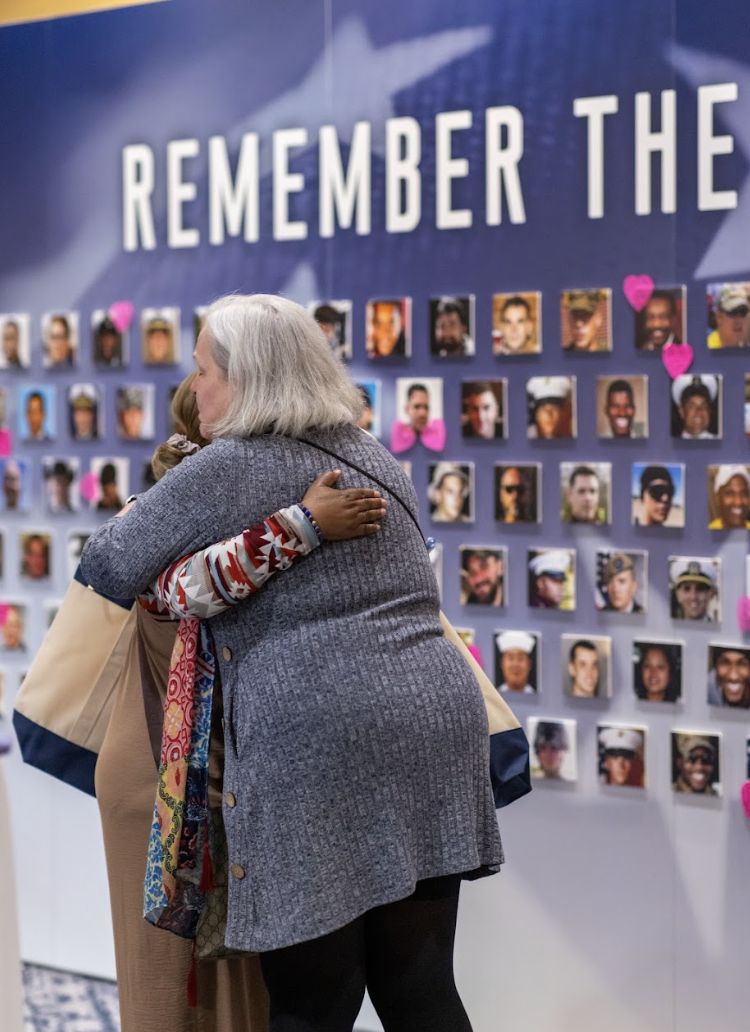
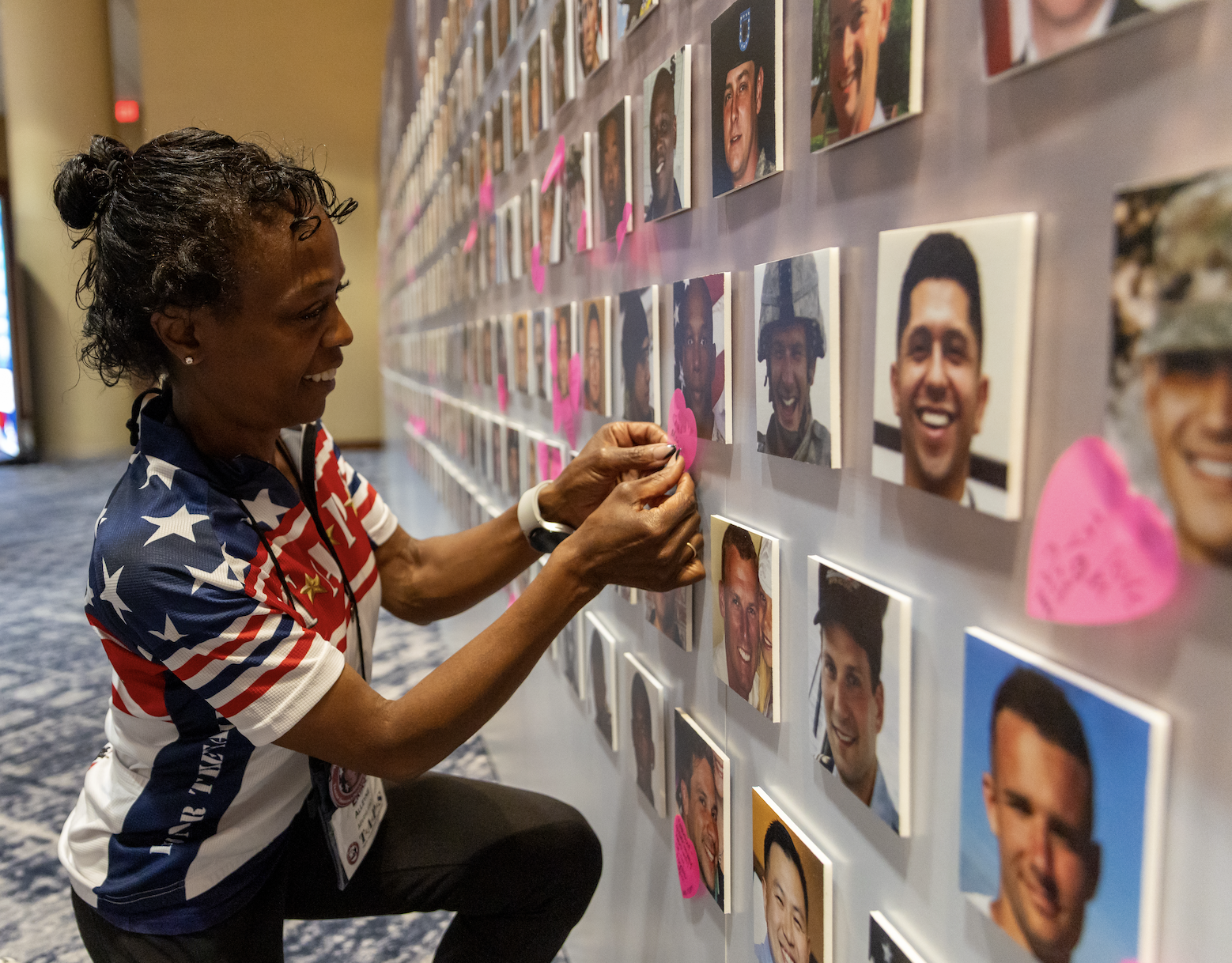
This is what Memorial Day looks like when you mean it — not as a holiday, but as a promise.
A promise that the people who didn't come home are still being spoken about, still being loved, still seated at the table. The same table that Bonnie Carroll built all those years ago, that gets longer, every year.
