
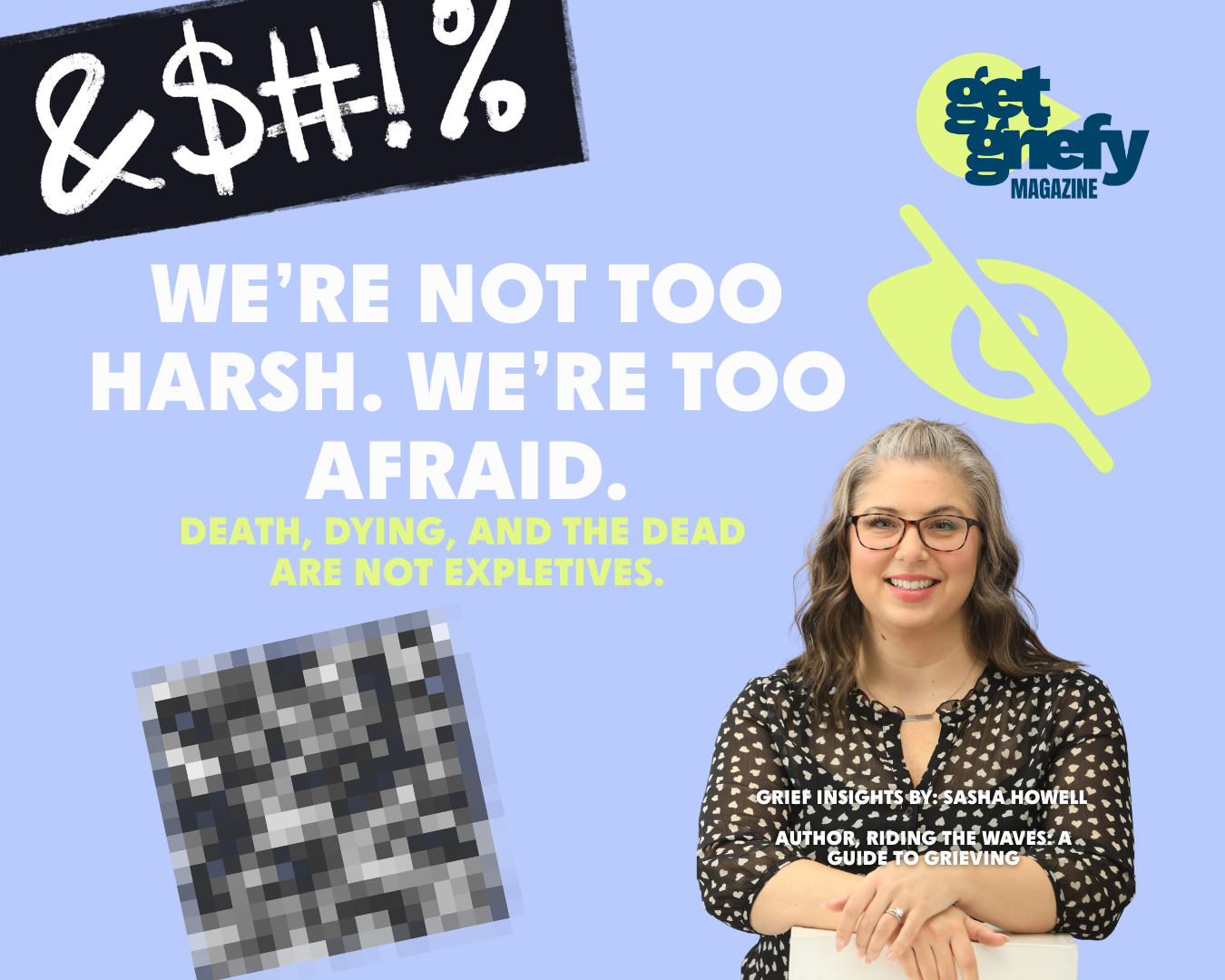
We’re Not Too Harsh. We’re Too Afraid.
Death, dying, and the dead are not expletives.
By SBC Member Sasha Howell- Author, Riding the Waves: A Guide to Grieving
Last week, someone shared the news of a death on social media.
Almost immediately, the comments followed, not about the person who died, not about the life they lived, not even about the grief left behind, but about the word used.
“Dead feels so harsh.”
“Maybe say passed.”
“Couldn’t this have been softer?”
And I found myself wondering: When did honesty about death become the problem?
Let Me Be Clear About Why This Matters to Me
Both of my parents died.
Not passed. Not lost. Not no longer with us.
They died. They are dead.
And saying that doesn’t make me cruel. It makes me honest.
What was cruel was how unprepared I felt when it happened. How little language I had. How few places there were to talk openly about what grief actually feels like when it moves in and refuses to leave.
The Softening That Didn’t Save Me
When my parents died, the softened language didn’t protect me. It didn’t make the pain gentler. It didn’t make the loss easier to carry. It made everything feel more isolating.
Because my reality was sharp and real, while the world around me wanted it wrapped in polite phrasing. People didn’t know what to say, so they avoided saying anything at all. Or they reached for words that felt safer for them, even when they felt hollow to me.
Grief doesn’t need euphemisms. It needs truth, space, and permission.
Why I Write About Grief at All
I write about grief because when I was drowning in it, I couldn’t find anything that felt truly honest or genuinely helpful.
I found plenty of advice about “moving on.”
Plenty of timelines I was apparently failing.
Plenty of silver linings I didn’t ask for.
What I couldn’t find was language that said:
This is brutal. This will change you. And you’re not broken for feeling that.
So I started writing the thing I needed and couldn’t find.
Not polished grief. Not inspirational grief. Real grief.
The Cost of Avoiding the Word “Died”
When we refuse to say dead, we don’t make death kinder, we make grief lonelier.
We teach people that their reality is too much.
That their loss needs to be edited.
That honesty about death is impolite.
But death will still come.
And when it does, softened language won’t catch you when you fall.
Preparation doesn’t come from avoidance.
Resilience doesn’t come from silence.
Why I’ll Keep Saying It Out Loud
My parents died.
I grieve them every day in ways that evolve but never disappear.
And I talk about death because pretending it isn’t real doesn’t help anyone survive it.
Talking about grief doesn’t invite darkness.
It invites connection. It invites understanding. It invites people to feel less alone when their world cracks open.
So yes - the word dead might make some people uncomfortable.
But silence makes grief unbearable.
And that’s why I’ll keep writing. That’s why I’ll keep talking. And that’s why I won’t soften the truth into something unrecognizable just to make it easier to scroll past.

By Sasha Howell
Sasha Howell is an independent author who writes about grief, healing, and resilience, drawing from her own experiences to offer comfort and connection through her words. She has published three books and contributed to a collaborative anthology. Expanding her reach beyond writing, Sasha is pursuing speaking opportunities and working on her next book.
