
Hayden Panettiere’s Death is an Example of What We’re So Afraid to Address
No, grief and addiction aren’t glamorous…but left untreated, they are dangerous.
By: Chelsea Pegues

Help is available — Speak with someone today | 988 Suicide and Crisis Lifeline, Substance use support Languages: English, Spanish Hours: 24/7
I wasn’t expecting Hayden Panettiere’s sudden death on August 16, 2026, to affect me as deeply as it has. I suppose because she’s young and famous, we’re not connected in any way, and I never considered her dying. At all. And yet when I opened my phone this morning and saw the news, I immediately yelped. Truly—I made such a strange sound that my son came running into my room to see what was wrong. Neither of us was expecting my reaction. And then the tears came, for someone I had never actually known. Because, if I’m honest, the second I saw the story—in my heart I knew.
I knew the way the child of an addict knows. I knew the way someone who has stood at the base of a bridge and thought, “What if I just…” knows. Hayden needed help. She has for a while…and she didn’t get it in time. I can’t say there’s a specific person at fault for the circumstances that lead to her untimely death, because of course I don’t know the mechanics of her inner circle, and what her life looked like day-to-day. Yet I know what a person trying not to be in pain looks like. I’ve seen that person in my own mirror. I saw that person every time I looked at my father in the last few months of his life.
Recently, Hayden appeared on a popular podcast in which she spoke (with shocking candor) about her personal life and struggles, something she’s never really done prior to the release of her memoir, This is Me: A Reckoning (which she was promoting during that conversation). I am not a follower of this show, but I have seen (and couldn’t stop thinking about) the portion during which she discusses the grief she carries for her younger brother Jansen. Hayden breaks down, saying he was the “Yin to my yang,” an extension of herself, and she felt immense guilt at not being able to “protect him.” While her family initially framed his death as result of cardiomegaly, Hayden discusses his intense struggles with cocaine and heroin as contributors. Jansen died in 2023.
According to a May 2026 article by Clare Mulroy for USA Today, “In her memoir, it’s revealed that ‘When Panettiere was just four, her mother pushed her through the busy Manhattan streets from audition to audition, bookending each call with the phrase ‘Don’t phone it in.’ Praised for her tears and dramatic expressions, Panettiere reflects that she ‘began to associate catastrophe with adoration.’ As well, Mulroy writes, “In the throes of postpartum depression, Panettiere became addicted to alcohol and Klonopin. At one point, a doctor told her she’d be dead within five years if she didn’t stop drinking. [While filming Nashville,] no one brought up her addiction, which she says contributed to an ‘enabling’ environment. Instead, the writers mirrored her character’s Season 4 arc after [her] life.”
I hate that, as I write this, there are keyboard warriors and social media figures out there who are painting her as just another Hollywood cliché because of this all-too-familiar backstory.
But I BEG you, see beyond the broad strokes. I made the same mistakes. I led with so much judgement and anger while my own father was struggling with Alcohol Use Disorder. I thought it was a choice he made, over and over. I thought he loved being drunk more than he loved me. I would beg him to stop, I would pour out his bottles…hell, I even picked him up from jail in the wee hours of a spring morning. And nothing would stop him from relapsing eventually.
What I didn’t understand, what so many people don’t understand, is that it is sincerely not a choice. According to Yale Medicine, “Addiction rewires the brain by flooding the reward system with massive amounts of dopamine, forcing the brain to adapt by reducing its natural dopamine production and receptors, and weakening the prefrontal cortex—which controls judgment and impulse.” It’s not about choosing anymore. Your body knows it wants to survive, and in order to do so, it now believes the only way is to keep giving it the chemical it needs. Grief is a fun bonus to this disastrous equation. As neuroscientist Mary-Frances O’Connor frames it, “Yearning for a lost loved one triggers intense motivational drive, much like craving a survival resource. When combined with depression, which depletes emotional regulation and hope, this unfulfilled neural drive can lead individuals to seek external chemical shortcuts to soothe the unbearable pain of absence.”
What pains me so deeply about Hayden’s death is that she was telling us she needed help. Perhaps she wasn’t standing on a street corner holding a cardboard sign which read “Help me, I’m sad,” but the flags were blazing red. And it punched me in the gut to realize that this, this is why I am so devastated. Because the flags were on fire with my own dad, and I didn’t know how to help. And I lost. And so did he.
This isn’t a piece about self-flagellation and personal guilt. It is about the desire to do better. Things are considered cliché for a reason, right? Because it’s something that’s been said or done so many times it’s lost a deeper meaning. We’ve all read the “wayward-child-actor saga” so many times. And so, it’s easy for us to adopt the bystander effect, and look away when someone is suffering. Someone else will do it, someone else will help. They’re rich and famous. I’m sure they have resources. They have plenty of people around them for support.
It’s probably quite the opposite.
My dad, Eddie, was an extraordinarily talented drummer. He was charming, gregarious, handsome and so, so smart. He had a natural talent for relating to me, and never have I felt so seen and understood as when we were together. When I was a kid and we would go on hikes, my dad would explain the importance of walking quietly in the woods, so that you don’t scare away the wildlife—and man, did we see some very cool stuff together. He was the kind of guy who would point out the beauty of the way the light filtered through trees, or the animal shapes in clouds. He taught me to dance in puddles and how to catch fireflies in my hands. The kind of dad who would swipe my CDs just to listen and try to understand the music I liked. The kind of dad who gently pushed Otis Redding and Stevie Ray Vaughan and Thelonious Monk my way (thank the universe).
Eddie grew up in a 1960s Catholic School setting where he suffered more than he learned. His struggles with depression and addiction began at age nine. His own mother died from cirrhosis, and his grief was profound—and rarely addressed. All my life, my parents fought over his dependence on alcohol. And all I learned, growing up, was that drinking made my precious father obnoxious and unacceptable. When he was sober, he was exceptional.
What I wish everyone (what I wish I) knew about addiction and depression is this: They often happen together. They feed into each other and change how the brain handles stress and reward. For the best chance at real healing, both should be treated simultaneously. Loving someone who is addicted is hard. But they are worth it, and they are not choosing anything over you. They simply don’t have a lot of say in the matter, period. What they do need is appropriate help that you may not be able to provide on your own—and that help could possibly be in a setting that is not your home. It’s probably going to be an awful, painful road, littered with things you may regret saying, that they’ll regret saying…and that’s okay. It happens. Addiction often makes people feel isolated, ashamed, or unworthy of love. Showing up, educating yourself and your family, and reminding your person that they matter are the first steps toward (hopefully) finding long-term success in recovery.
Shaming my dad never worked, even at his lowest points. The day I found out he was dead, I thought he had simply been drinking and passed out. I thought, “I’ll show him” and called the cops to do a wellness check when he didn’t answer his phone. I assumed the embarrassment of answering the door to a few police officers on his porch would be the key to making him realize enough was enough.
When no one called me back after 30 minutes to tell me he was fine, if a little funky, I knew. I knew the end had finally come, and there was nothing I could do about it now.
I wish, instead, that I had researched treatment options after his alcohol-related stroke in 2018. I wish I had found out sooner about Disulfiram, and similar medications. I wish I had insisted on family therapy. I wish I had known that children of alcoholics have the right to go to AA meetings, too. I wish so many things were different.
Instead of the judgement that will surely come over the next few days as more details about Hayden’s circumstances are released, lead with love. Compassion. Empathy.
Remember this: there is a little girl in the world who just lost her mama. Who probably won’t understand for a long time that she didn’t choose to leave. Who won’t know the internal fight her mother put up every day, just to make it through one more sunrise.
Be gentle. With yourselves, with each other. The ONE thing I wish I could tell my dad is that I get it now. Man, I get it now. And I’m so, so sorry you spent all that time seeing me…and I was blind to you.
Rest easy, Hayden. Say hello to my dad if you see him. I hope you’re both at peace. No judgment here.
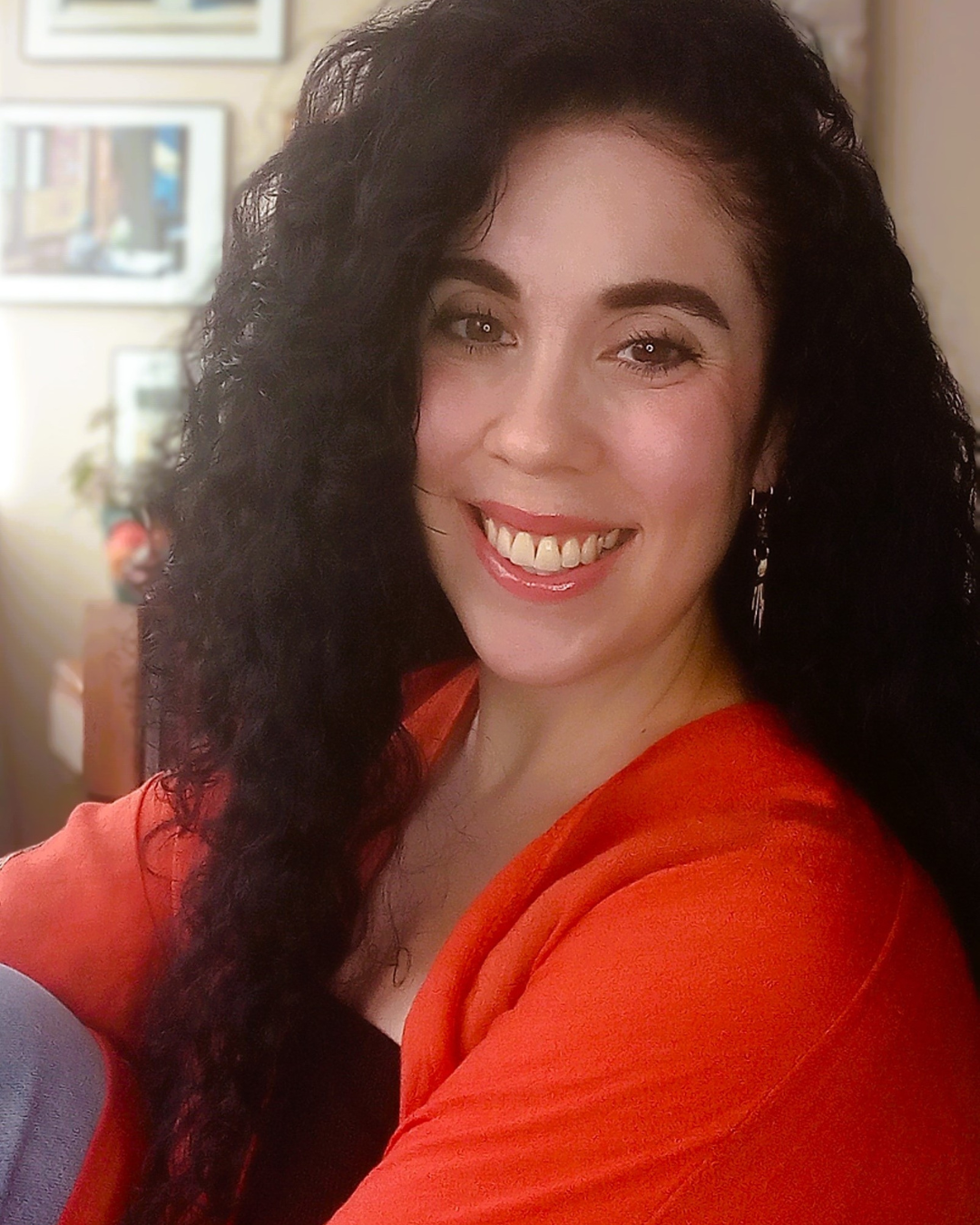
Chelsea Pegues is a writer based in New York. Though her work often focuses on
addiction, grief, and family structures, she has also co-written a children's book about
friendship, and enjoys writing interview-based pieces on myriad topics.
In December 2020, Chelsea’s father died due to Alcohol Use Disorder. Three years
later, she experienced her own near-fatal accident. As a result, she left a corporate job
to transition into writing full-time. Her desire, moving forward, is to apply her creativity
and skills to projects that make a positive impact in the world.
As a result of these transitions, Chelsea is grateful to notice that she’s finding her joy.
Finally.
