
Why One Therapist Is Choosing Not to Follow the Lindsay Clancy Trial
A lesson in protecting your peace after grief.
By: Erin Barbossa
My girlfriends from college are talking about it, my sisters are talking about it, and it's all over my feed. But I'm hiding from the Lindsay Clancy trial.
For nearly 15 years, I worked as a therapist specializing in postpartum mental health. I attended one of Postpartum Support International's early large-scale training on perinatal mood disorders. I know more than I ever wanted to know about postpartum psychosis. I also know what psychosis looks like when it enters the life of someone you love, because my best friend died at 41 after six months of a debilitating mental health crisis that included psychosis.
So I'm not really following the trial. I'm picking up pieces through the zeitgeist, a headline here, a conversation there, something someone sends me, and even those fragments feel too familiar. The medications. The professionals. The desperate search for something that will help. The terrifying gaps between what a person needs and what our systems are equipped to provide.

I spent much of my career inside the mental health system, and after my best friend died, my relationship with that system became much more complicated. I started questioning how quickly we can move toward asking, "What is wrong with her?" instead of asking, "What happened to her? What is happening around her? What makes her pain make sense?" I had spent years believing deeply in treatment, and I still do, but I no longer believe treatment and healing are always the same thing.
There have been other stories about women lately that touch this same raw place in me. Hayden Panettiere's story did it too. I don't know these women. I don't know everything that happened inside their homes, their relationships, their bodies, their treatment, or their minds, and I don't pretend to. That's almost the point. Their stories get close enough to mine that my body recognizes something before my brain has time to intellectualize it.
I knew a woman with an enormous heart. Someone who loved her children until her heart bled with worry. Someone who cared about other people and believed deeply in her responsibility to contribute something good to this world. Her funeral was standing room only, with traffic backed up outside because so many people loved her, and yet most of those people had no idea how much pain she was in. Some of us did, and we still couldn't find any force strong enough to free her from it.
That is one of the hardest truths I live with. My best friend was profoundly loved, and she was profoundly suffering at the same time.
Before she died, I think I believed love, education, access, friendship, therapy, doctors, family, resources, and sheer determination created some kind of protective net beneath us. If something got bad enough, someone somewhere would know what to do. Then someone I loved fell through.
Grief didn't only break my heart. It changed my worldview. I miss my best friend of course, but I also miss the simplicity of the world I lived in before she died. I miss the version of myself who trusted more easily. I miss believing that the systems designed to help and protect us would know what to do when someone's suffering became unbearable.
That innocence is gone, and because of that, there are stories my nervous system no longer experiences simply as information. They feel personal. They feel close. They remind me how quickly a life can become unrecognizable.
This is strange for me because I've always been someone who goes toward the hard stuff. I studied communications. My first job out of college was as an NBC Page. I've been active in political discourse. I followed the news. Later, I became a therapist and built a career around sitting with people in pain. I believed that paying attention, talking about difficult things, and destigmatizing what people would rather keep hidden were part of being a responsible human being.
Then my best friend died, and I started to feel almost allergic to some of the things that had once been such a normal part of my life.
For a while, I wondered if that was avoidance. I’m a therapist. I know what we say about avoidance. We talk about facing our fears, increasing our tolerance, learning not to organize our lives around anxiety. But I keep coming back to the word allergic. If you learn that something causes a reaction in your body, avoiding it isn’t weakness, it’s adaptive. You stop repeatedly exposing yourself to something simply to prove you can tolerate it.
Maybe grief has given me a different kind of sensitivity. I know myself better now. I know what happens inside me when I consume certain stories. I know where my mind can go, and I know what my body remembers.
So now I wonder if some of what I've been calling avoidance is discernment.
I don't need to know every detail of every terrible thing happening in the world to prove that I care. I don't need to participate in every conversation simply because it's important. And I don't need to repeatedly expose myself to something that destabilizes me in order to prove that I'm healed.
Maybe protecting our peace isn't pretending terrible things don't happen. Maybe it's knowing that they do, knowing exactly how deeply they can affect us, and becoming more intentional about what we allow inside.
Grief has made me softer in some ways and fiercely protective in others. I protect my mornings. I protect what I watch and read. I protect my relationship with beauty. I go outside. I write. I put my hands in the dirt. I swim. I notice flowers. I laugh with people who know the whole story. I make things. I let myself love this life even after learning how terrifyingly fragile it is.
And maybe that's the strangest lesson grief has given me. I know more about what can destroy a person than I ever wanted to know, and somehow that knowledge has made me far more interested in what keeps us alive.
Connection, beauty, creativity, community, rest, pleasure, love. These aren't frivolous things to me anymore. They're the things I pay attention to. They're the things I want more of. They're the things I want to protect.
So I'm not watching the Lindsay Clancy trial. The version of me who existed before my best friend died might have thought looking away meant I wasn't strong enough to face it. The woman I am now knows I don't have to consume everything painful in order to care about it.
And I don't have to apologize for protecting the life I fought so hard to come back to.
About the Contributor
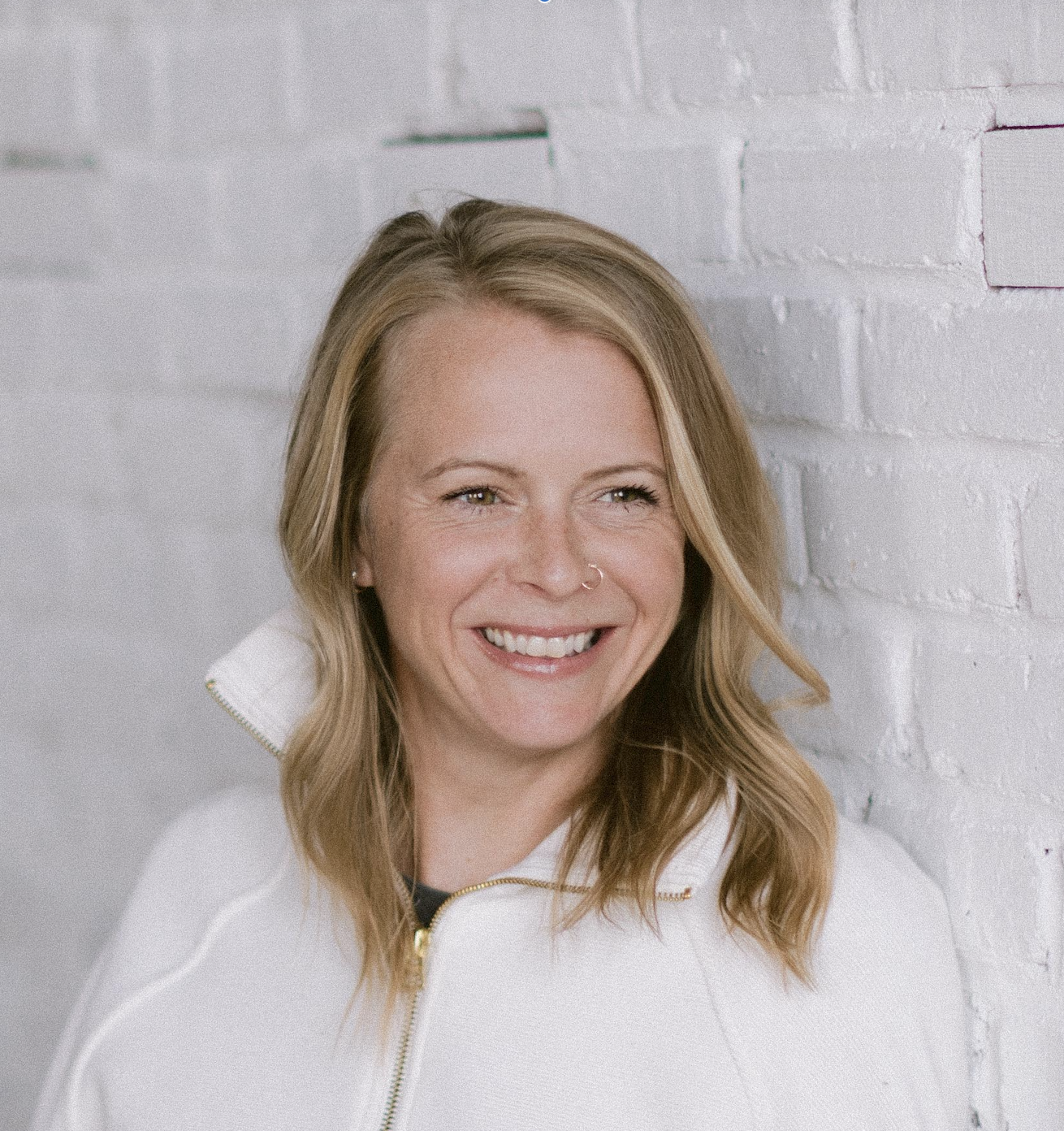
Erin Barbossa, LMSW, is a therapist, grief coach, and founder of LionFlower Studio, where she helps women navigate loss through creativity and connection. After nearly 15 years working in women’s mental health, the death of her best friend changed both her personal and professional understanding of grief. Her work now explores what helps us come back to life after loss, with a focus on creative health, storytelling, community, nervous system care, and finding beauty alongside grief. You can follow Erin @ebarbossa and @lionflowerstudio
Want to Write for Get Griefy Magazine?
Did you know that Small Business Collective members can submit proposals and contributions to Get Griefy Magazine for free?
Whether you’re interested in becoming a regular contributor or simply have a one-off piece you’d love to share, we’d love to hear from you!
Not a member? No problem! You can submit a proposal through our website for consideration. If your piece is selected, we ask for an optional $25 donation to the magazine to help support our mission of providing 100% free grief support to all.
Selected contributors receive:
Social media graphics to help promote your piece
A contributor bio
Links to your website and/or social platforms
Promotion through Get Griefy
Use of the Get Griefy logo to promote your contribution
Have a story, perspective, resource, or idea you’d like to share with the grief community?
Submit your proposal and help us keep the conversation around grief open, accessible, and free.
